A good website simply does the job. A great website exceeds expectations, engaging its audience and delivering lasting value. But what are the underlying principles that elevate a website from functional to exceptional?
While there are many opinions on web design, a great website consistently excels across five core dimensions: content, aesthetics, user-centered design, architecture, and purpose.
1. Content
Discoverability and Access
If a visitor cannot find the information they are looking for, they have no reason to remain on your site. Content must be easy to discover through multiple intuitive pathways. A clear, chronological flow of articles, structured navigation, and a direct notes index allow users to explore at their own pace. Allowing visitors to access recent historical content easily, such as catching up on missed updates after a short absence, enhances user satisfaction and utility.
Originality and Freshness
Original, high-quality content is what keeps a website alive. Establishing a consistent editing and publishing schedule ensures that a site remains relevant to both visitors and search engines. Keeping core structural pages—such as the “About” or “Services” sections—fresh is just as important as publishing new articles, signaling to search engines that the site is actively maintained.
2. Aesthetics
Visual Appeal and Fit for Purpose
A website should be physically appealing to look at, tailored to its specific audience and function. Visual design does not need to be glitzy; it must be appropriate for its purpose. A clean, balanced layout respects the reader’s eyes, encouraging them to stay and read rather than leaving due to visual clutter or outdated patterns.
Structural Expectations
Unless you are deliberately aiming for an avant-garde design, it is best to respect standard layout expectations. Users have become comfortable with established spatial arrangements, such as the classic grid layout shown below.
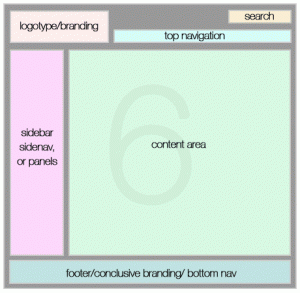
Positioning key elements—such as the branding in the upper left, main navigation in the top right, and the content in a prominent central column—makes a site instantly familiar and easy to navigate.
Visual Consistency
A cohesive color palette, typographic system, and UI styling reinforce trust. Inconsistencies—such as using multiple different link styles, varying button shapes, or conflicting header fonts—increase cognitive load. Consistency ensures that visitors can easily understand how the site works and navigate it intuitively.
3. User-Centered Design
Usability and Accessibility
Usability and accessibility should be core practices, not afterthoughts. A simple yet vital check is ensuring that link colors remain legible and distinct for visitors with varying degrees of color blindness. Ensuring high contrast between text and background ensures that everyone has an equal opportunity to read and engage with your content.
Error Correction
Users will inevitably get off-track or end up on a page they did not intend to visit. A robust header navigation, clear breadcrumbs, and a consistent link back to the homepage serve as essential escape routes, allowing users to quickly correct course.
Readable URLs
Clean, descriptive URLs are vital for both usability and search engine optimization. A URL like missingpixel.net/notes/what-makes-a-great-website/ is immediately understandable, telling the visitor exactly what to expect before they click. Cryptic query strings or hidden parameters degrade user confidence.
4. Site Architecture
Logical Structure
A website should follow a predictable, top-down hierarchy: a clear header, followed by intuitive navigation, the main content area, and a solid footer. The footer serves an important psychological purpose: it signals to the user that they have reached the end of the page and that the layout has fully loaded.
Classification and Context
The way information is classified and connected is just as important as the content itself. Linking to related articles and establishing meaningful editorial context helps visitors explore deeper, building a coherent web of knowledge rather than isolated fragments of text.
5. Purpose
Ultimately, a website must have a clear, underlying purpose. Every page, tool, or essay you publish should serve to inform, inspire, or assist your visitors. By defining your niche and focusing on delivering real value, you build an online presence that is memorable, sustainable, and built to last.